The Sword and the Trowel
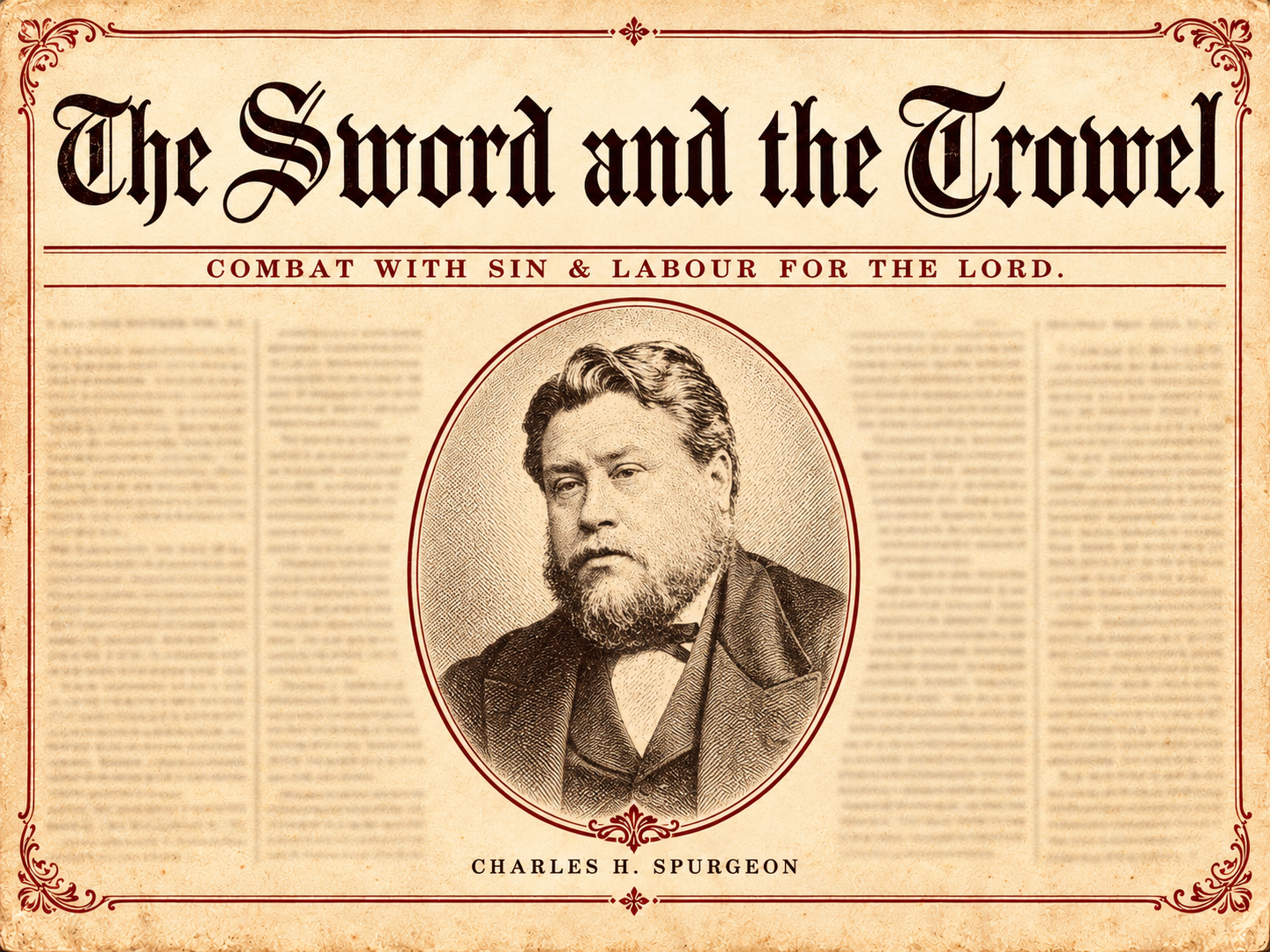
One hand worked; the other stood ready to defend. That picture from Nehemiah gave Charles Spurgeon’s magazine its name and purpose. Within its pages, the preacher’s familiar voice opens onto the wider life and work of his London ministry.
On the title page stood a picture drawn from Scripture: builders laboring on Jerusalem’s wall while keeping their weapons close. The work required both a tool and a sword. Charles Spurgeon found in that picture a fitting name for a new magazine. The Sword and the Trowel began in January 1865, when the ministry around London’s Metropolitan Tabernacle was growing in many directions. Spurgeon’s sermons already reached readers beyond the congregation. Students from the Pastors’ College were going out into ministry, and church members were taking part in charitable and evangelistic work. There were efforts to explain, needs to share, and fellow workers to encourage. In the opening issue, Spurgeon described a publication that would keep friends informed about the churches and associations connected with that work. It would also set forth the convictions they shared. Other ministers, including men trained at the college, would contribute their voices. The title expressed the purpose. The trowel suggested patient building, and the sword suggested readiness to defend the truth. Spurgeon brought both concerns to the monthly magazine, seeking to strengthen Christian service while addressing errors he believed endangered the church. Its early pages bring those purposes into focus. Alongside teaching and exposition appear practical subjects, book reviews, notices, and reports of the college and congregation. A reader can move from a passage of Scripture to the everyday business of ministry within the same issue. That movement gives the collection its particular warmth. Here we meet Spurgeon amid work that required attention beyond the preparation of a sermon. We also encounter the people and ministries gathered around him. As you turn through these issues, look for the smaller notices as well as the longer articles. They help us see the living church behind the celebrated pulpit, and the many hands engaged in the work represented by the sword and the trowel.


